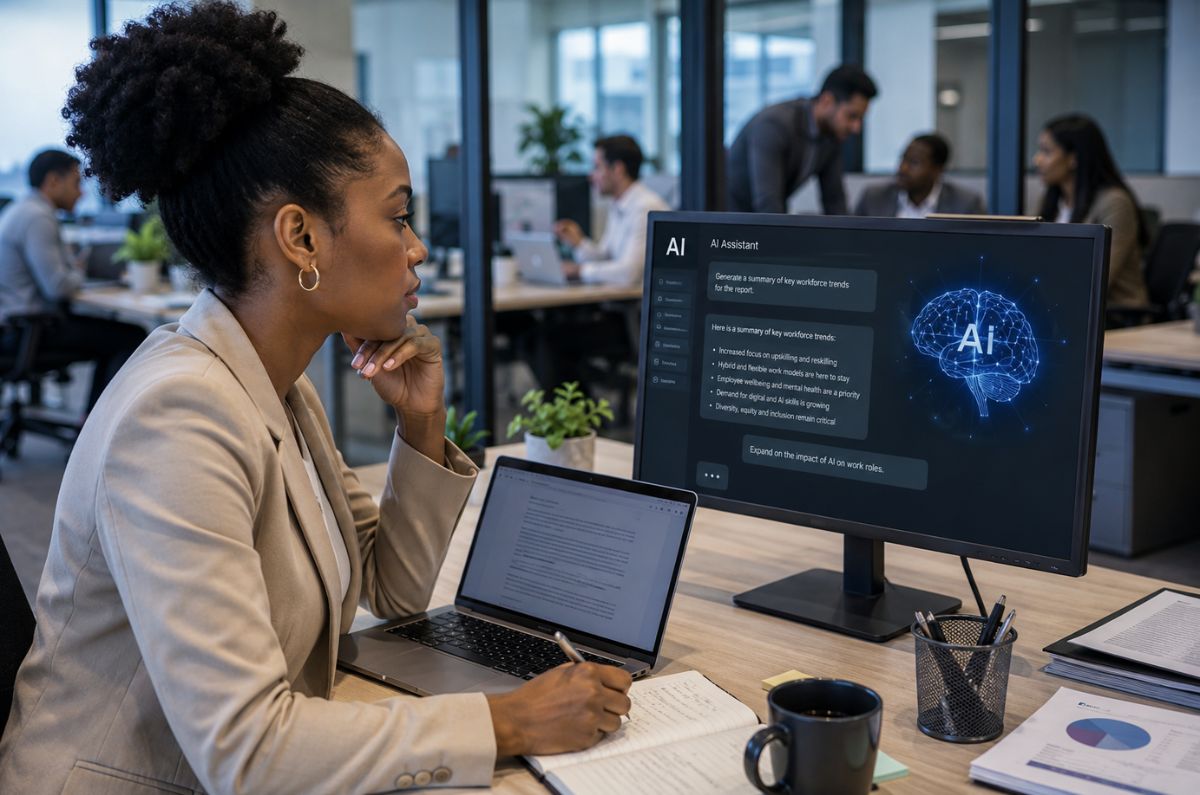
Artificial Intelligence (AI) has become an increasingly valuable tool in the modern workplace. Employees use AI-powered platforms to draft emails, prepare reports, conduct research, analyse information, and perform administrative tasks more efficiently. While these technologies can significantly enhance productivity, their growing use has also created new challenges for employers and employees alike.
Risks and Concerns Around the Use of AI
One of the primary concerns is the tendency to accept AI-generated information without independently verifying its accuracy. AI systems are designed to produce responses that appear confident, professional, and authoritative. However, AI tools do not reason or assess information in the same manner as human beings. As a result, they may generate inaccurate, outdated, incomplete, or entirely fabricated information, commonly referred to as “AI hallucinations”. The risk arises when employees rely on AI-generated content without exercising their own judgment or conducting appropriate verification. Inaccurate information may find its way into reports, presentations, policies, contracts, or business communications, potentially exposing organisations to financial, legal, operational, or reputational harm. In sectors such as human resources, finance, healthcare, engineering, and legal services, even seemingly minor errors can have significant consequences.
Another emerging concern is the potential impact of overreliance on AI tools. Traditionally, employees would gather information from multiple sources, evaluate evidence, and apply critical thinking before reaching conclusions. AI systems can streamline this process by providing immediate answers and recommendations. While this may improve efficiency, there is a risk that users may become less inclined to question information, test assumptions, or identify errors independently. The use of AI also raises important questions regarding accountability. When errors occur, responsibility does not shift to the technology itself. Employees remain accountable for the quality, accuracy, and reliability of their work, regardless of whether AI tools were used in its preparation. AI should therefore be viewed as a support tool rather than a substitute for professional judgment. From an employment law perspective, employees may face disciplinary consequences where negligent or inappropriate use of AI results in misconduct, poor work performance, breaches of confidentiality, inaccurate reporting, or damage to the employer’s reputation. Employers should therefore ensure that workplace policies clearly regulate the acceptable use of AI technologies and set appropriate standards for verification and oversight.
Case Studies
Our courts have also cautioned against the uncritical use of AI-generated information. In Mavundla v MEC: Department of Co-Operative Government and Traditional Affairs KwaZulu-Natal and Others (7940/2024P) [2025] ZAKZPHC 2, the KwaZulu-Natal High Court criticised legal practitioners who relied on non-existent case authorities that appeared to have been generated by AI. The court described the conduct as irresponsible and unprofessional and referred the matter to the Legal Practice Council for further consideration. Similarly, in Northbound Processing (Pty) Ltd v South African Diamond and Precious Metals Regulator and Others (2025/072038) [2025] ZAGPJHC 661, the Gauteng High Court emphasised that legal practitioners who use AI-generated research have a professional duty to verify the accuracy of that information against authoritative sources before relying on it. The court highlighted the broader risks that the misuse of AI may pose to public confidence and the administration of justice. Employers should also be mindful of confidentiality and data protection risks. Employees should not input confidential, proprietary, or personal information into AI systems unless authorised to do so and in accordance with company policies and applicable legal requirements.
Conclusion
AI offers considerable opportunities to improve workplace productivity and efficiency. However, its benefits can only be fully realised when it is used responsibly and alongside human oversight. Employees should approach AI-generated content critically, verify important information, and continue to exercise professional judgment in their work. Organisations that successfully integrate AI while maintaining standards of accountability, accuracy, and integrity will be best positioned to benefit from this rapidly evolving technology